


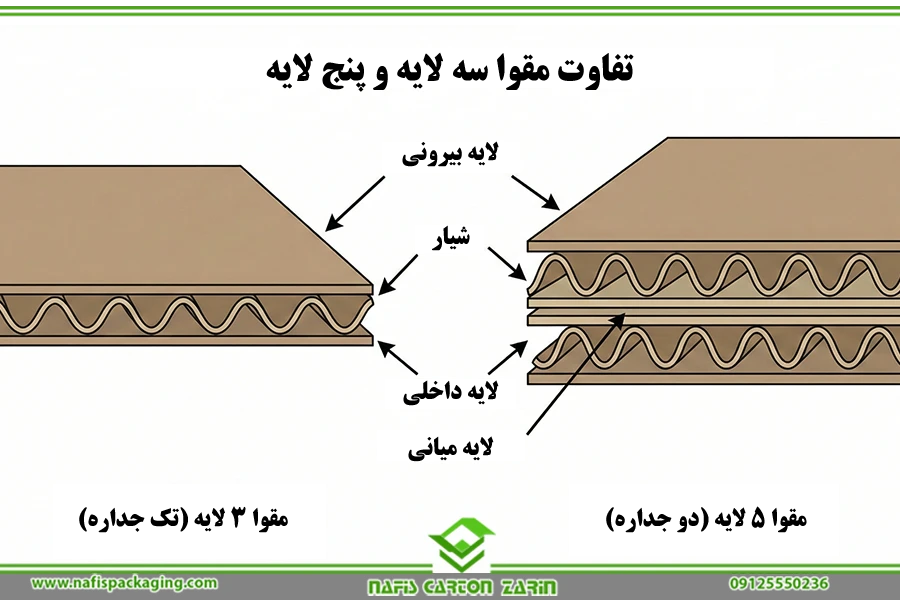
The difference between three-layer and five-layer cardboard
In the world of packaging, choosing the type of carton is one of the most important decisions that can directly affect the quality of shipping, product protection, and even the final costs of the business. Among the different types of cartons, three-ply and five-ply cartons are the most widely used and are usually the first options that manufacturers and online sellers turn to. In this semi-official, comprehensive, and fully SEO-friendly article, we are going to examine the difference between three-ply and five-ply cartons from all angles so that you can make the best choice for packaging your products.
Introducing the structure of three-layer and five-layer cardboard
What is three-layer cardboard?
Three-ply carton consists of two layers of smooth paper (liner) and a corrugated inner layer (flute). This structure is lightweight and flexible and is used for packaging light to medium-heavy products. It usually uses C, B or E flutes, each with its own characteristics.
What is five-layer cardboard?
Five-ply cartons are made of three plain layers and two fluted layers. This structure provides increased strength, impact resistance, pressure resistance, and moisture resistance, making it a good choice for heavy, fragile, or export goods. The common flutes in five-ply cartons are usually a combination of C+B or C+E.
The main difference between three-layer and five-layer cardboard
1. Strength and durability
The most important difference between these two types of cardboard is their level of resistance.
- Three-ply cardboard has medium strength and is suitable for goods that do not weigh very much.
- Five-ply cardboard is much stronger because it has two flutes and is the best option for heavy, sensitive, or bulk goods.
If your product is likely to be damaged during transportation or requires high protection, five-layer cardboard will definitely be a safer choice.
2. Carton weight and thickness
Five-ply cardboard is thicker and heavier than three-ply cardboard. The increased weight of the cardboard usually means slightly higher shipping costs; but in return, it multiplies the security of the product.
3. Price
In terms of price, five-ply cardboard is more expensive because it has more raw materials and its production process is more complicated. However, if the product is valuable or fragile, choosing five-ply cardboard is actually an investment in preventing damage.
4. Uses
Uses of three-layer cardboard:
- Food industry (biscuits, cakes, tea, dried fruits)
- Cosmetics
- Clothing
- Light household appliances
- Online stores with lightweight products
Uses of five-layer cardboard:
- Heavier appliances (microwave, rice cooker)
- Industrial parts
- Car parts
- Sensitive electronics
- Exported devices and equipment
5. Pressure and impact resistance
Five-layer cardboard is more resistant to vertical pressure and impact due to its two internal flutes. This feature makes:
- Can be arranged in the warehouse.
- Do not wrinkle or dent during transportation.
- The product inside is not damaged.
6. Print quality and appearance
Three-ply cardboard, due to its smoother surface, is usually better suited for delicate prints and final packaging where appearance is more important. Of course, five-ply cardboard is also printable, but is usually less used for a luxurious look.
7. Flexibility
Three-ply cardboard is more flexible and is used for products that require more formable packaging. In contrast, five-ply cardboard is stiffer and less likely to deform.
Comparison table between three-layer and five-layer cardboard
| Feature | Three-layer carton | Five-layer carton |
|---|---|---|
| Resistance | Medium | Very high |
| Weight | Light | Heavy |
| Thickness | Low | High |
| price | Economical | |
| Excellent | Good | |
| Application | Light products | Heavy products, export |
Why is it important to choose the right one between three-ply and five-ply cardboard?
If the carton is weaker than the product needs, the likelihood of damage to the product increases; on the other hand, if the carton is chosen too strong, it may create unnecessary additional costs. Therefore, the choice between the two should be based on:
- Product weight
- Fragility rate
- Shipping type (postal, freight, air)
- How to arrange in the warehouse
- Desired budget
To be done.
Which is better: three-layer or five-layer cardboard?
Neither is absolutely “better”; each is made for a specific purpose. If you have a light or medium-weight product, three-ply cardboard is a good choice for both price and weight. But for heavy or sensitive goods, five-ply cardboard is the standard and safest choice.
Tips for choosing the best carton
1. Check the product weight carefully
If your weight is over 8 to 10 kilograms, five-layer cardboard is recommended.
2. Consider the type of flute
Choosing the right flute can significantly increase the strength of the carton.
- C flute: durable and suitable for medium to heavy goods
- B flute: more compact and suitable for delicate packaging
- E-flute: Suitable for luxury packaging and high-quality printing
3. Consider the shipping method
Long-distance shipping or freight requires greater strength.
4. Printing and branding
If you intend for the packaging to have an advertising role, three-layer cardboard with better printing is a more suitable option.
The use of three-layer and five-layer cartons in online stores
Online stores usually have different orders of cartons depending on the type of products they have. Light goods such as cosmetics, clothing and decorative items are usually shipped in three layers. But expensive goods such as laptops, electrical appliances and sports equipment require five layers of carton.
Also, many stores use a combination of two types of cardboard to reduce costs: lighter inner packaging + five-layer outer packaging.
Final results: The difference between three-layer and five-layer cardboard at a glance
- Three layers is more economical.
- Five-layer is more durable and suitable for heavy goods.
- Three layers is better for fine printing.
- Five layers provide more security for long transmissions.
- The final selection should be made based on the weight, sensitivity, and value of the item.
Conclusion
In this article, we have fully and semi-formally examined the difference between three-ply and five-ply cardboard. Now you know what features each has and what types of products they are suitable for. If you want to make a more accurate choice, always consider the weight of the product, the type of shipping, and the level of protection required. Choosing the right cardboard can help reduce costs, increase customer satisfaction, and prevent potential damage.