


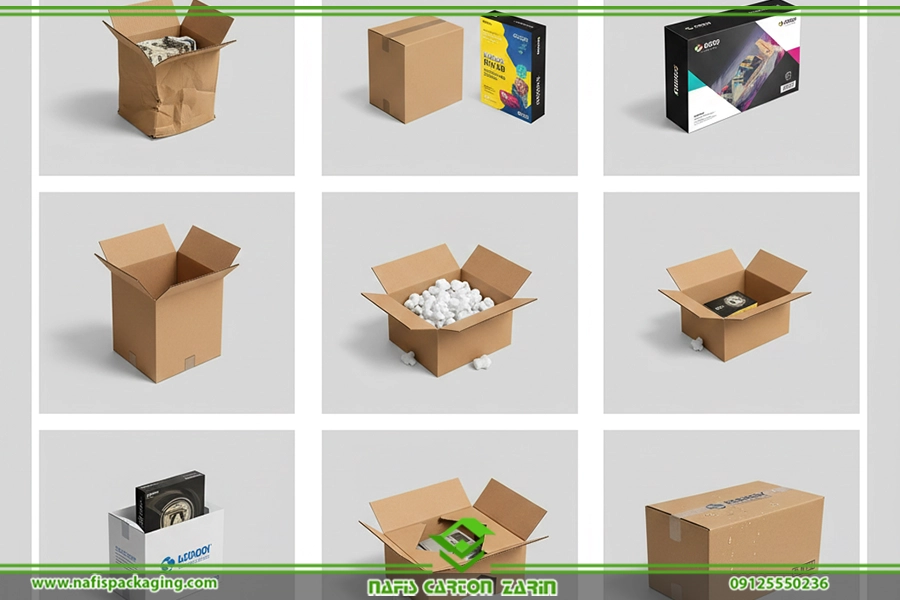
10 Common Mistakes in Product Packaging That Can Be Solved by Choosing the Right Carton
Introduction
Product packaging is the first point of contact between the customer and the product, playing a crucial role in product protection, customer experience, and sales. Many businesses face issues such as product damage, returns, and decreased customer satisfaction due to neglecting the type of cardboard and packaging used.
Mistake #1: Using low-strength cardboard
One of the most common mistakes is using thin or weak cardboard. These cardboards easily deform under pressure, impact, or the weight of the product, causing damage to the product.
Solution:
Choosing a carton with the appropriate number of layers (three or five layers) and standard flutes can provide sufficient resistance for transporting light to heavy goods.
Mistake 2: Ignoring the weight of the product
Many businesses choose cartons based solely on size and do not consider the actual weight of the product. This causes the carton to break and become crushed.
Solution:
- Checking product weight and carton tolerance
- Choosing five-layer cardboard for heavy goods
- Using laminated or durable cardboard for valuable products
Mistake #3: Not adequately protecting fragile goods
Sensitive products such as glass, electronics, and delicate foods require special protection. Failure to use partitions or bumpers increases product damage.
Solution:
Using interior partitions, shock-absorbing sheets, bubble wrap, or double-layer packaging provides better protection.
Mistake 4: Not paying attention to humidity and environmental conditions
Conventional cartons are sensitive to moisture and may deform during transportation or storage.
Solution:
Using laminated cardboard or cardboard with a moisture-proof coating increases the strength of the cardboard and prevents damage to the product.
Mistake 5: Inappropriate or poor quality printing
Poor or poor quality printing not only reduces the appearance of the product, but also causes damage to the print during transportation.
Solution:
Choosing the right cardboard for offset printing or lamination ensures high print clarity and color durability. Matte or glossy lamination protects the print and extends the life of the packaging.
Mistake 6: Inappropriate carton size
Using a carton that is too large or too small will cause excess product movement, damage, and waste of space.
Solution:
Choosing a carton with the right dimensions and adding internal partitions or fillers will limit product movement and create optimal packaging.
The seventh mistake: Poor glue or connections
Poor quality glue or improper bonding can cause the carton to open during transportation.
Solution:
Using strong industrial adhesives and controlling the quality of the adhesive lines makes the carton more durable and preserves the product.
Eighth mistake: Ignoring transportation standards
Failure to comply with international or local standards for packaging goods can cause damage to the goods in the warehouse and during transportation.
Solution:
- Using standard BCT and ECT cartons
- Compliance with the maximum tolerable weight
- Proper labeling for transportation
Ninth mistake: Lack of attention to customer experience
Packaging is part of the customer experience. Weak, open, and inappropriate packaging creates a negative experience.
Solution:
Choosing an attractive carton with appropriate design and high-quality printing increases customer satisfaction and loyalty.
Tenth mistake: Excessive savings on packaging
Some businesses use cheap packaging to reduce costs, but this increases damage and product returns.
Solution:
Investing in high-quality, product-appropriate cardboard will reduce additional costs and increase brand credibility in the long run.
Conclusion
In this article, we examined 10 common mistakes in product packaging that can be solved by choosing the right carton. These mistakes include choosing poor cardboard, not paying attention to weight and size, not protecting fragile goods, poor printing, poor connections, and ignoring the customer experience. By choosing the right cardboard, adhering to standards, using high-quality lamination and printing, these problems can be solved and durable, beautiful, and professional packaging can be created. These measures increase product safety, customer satisfaction, and reduce costs caused by product damage.