The importance of five-layer cardboard in packaging

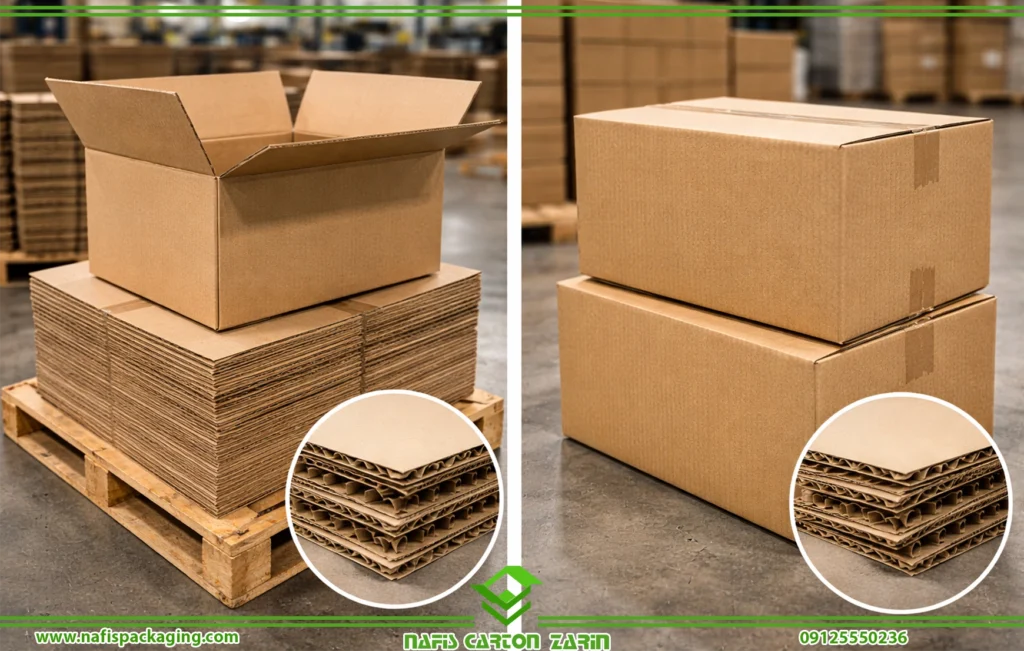
Five-layer cardboard is one of the most durable and widely used types of cardboard in the packaging industry. Due to its two flute layers and three flat layers (liner sheet), this type of cardboard is stronger than three-layer cardboard and is ideal for transporting heavy and bulky goods.

Five-layer cardboard is used in various industries such as food, pharmaceutical, industrial and even moving. In addition, due to its high resistance, this cardboard can provide adequate protection for products against impact, moisture and pressure.

In addition to protecting the goods, choosing the right cardboard plays an important role in advertising and branding. Printing on five-layer cardboard allows you to display logos, product information and even custom designs.

In this article, we are going to discuss the structure, types, production line, quality testing, applications and prices of five-layer cardboard so that you can make the best choice for packaging your products.

Part 1: Structure and components of five-layer cardboard

Five-layer cardboard consists of three flat layers (liners) and two flute layers in the middle.

1. Liner sheet

The liner sheet is the flat, outer layer of the cardboard, whose main function is to protect the product and withstand external pressure. This sheet can be produced from virgin or recycled paper, the higher the quality of the paper, the higher the resistance of the cardboard.

2. Flute Layer

Five-layer cartons have two flute layers sandwiched between three liner layers. The flutes can have different combinations:

  • B + C
  • C + E
  • B + E

Flutes increase the carton’s resistance to pressure, bending, and impact due to their corrugated structure.

3. Method of joining layers

Liner and flute sheets are joined together using glue and heat. The quality of the glue and heat pressure have a direct impact on the strength of the carton.

Advantages of the five-layer structure

  • Higher weight capacity (20 to 50 kg depending on the type of flute)
  • High flexibility for shaping and molding
  • Better resistance to impact and moisture
  • Ability to print and brand on cardboard
  • Suitable for packaging bulky and heavy goods

Part 2: Types of five-layer cardboard and their applications

Five-layer cardboard comes in different types depending on the combination of flute layers:

Cardboard TypeFlute CombinationApplication
B + CB-flute and C-flutePackaging food and medium industrial goods
B + EB-flute and E-flutePackaging toys, cosmetics, and lightweight to medium products
C + EC-flute and E-flutePackaging fruits, medicines, and sensitive products

Application of any type of carton

  • B + C: Suitable for bulky products with medium strength

  • B + E: Suitable for products that require printing

  • C + E: For packaging sensitive and fragile products

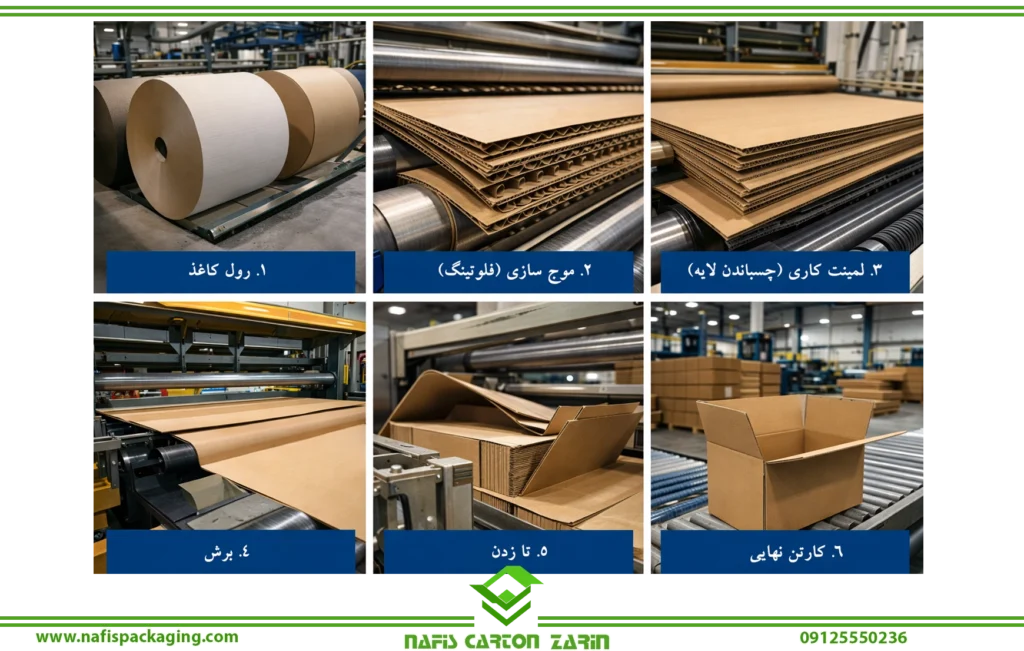
Part 3. Five-layer carton production line

  1. Raw Materials
    The raw materials include three liner sheets and two flute layers. The quality of the raw materials directly affects the strength and durability of the cardboard.

  2. Production Steps

  • Preparation of liner sheets and flutes

  • Applying adhesive and heating the layers

  • Compression and drying

  • Cutting and shaping to the required dimensions

  1. Machinery Used
    The main equipment in the five-layer cardboard production line includes the fluting machine, laminating machine, and hot press.

Part 4: Testing and quality control of five-layer cardboard

1. Compression test

The carton is placed between two plates and pressure is applied to determine the weight and bending capacity.

2. Water permeability test

The cartons are placed in water for a limited period of time to check the moisture absorption.

3. Layer bonding test

The degree of gluing and bonding of the layers is checked to ensure edge strength.

Part 5: Applications of five-layer cardboard in various industries

Five-layer cardboard has a wide range of applications across various industries:

  • Food and Beverage Industry: Fruits, food packaging, fragile containers

  • Pharmaceutical and Cosmetics Industry: Packaging sensitive and small products

  • Industrial Sector: Machinery parts and heavy equipment

  • Poultry Industry: Packaging eggs

Printing Tips for Five-Layer Cardboard:

  • E-flute is not suitable for direct offset printing

  • If printing is required, it is better to print on a separate sheet and then laminate it


Part 6: Five-layer carton price and how to inquire

The price of a five-ply carton depends on the following factors:

  • Flute combination and liner type
  • Order dimensions and quantity
  • Printing and customization requirements
  • Raw material costs

To inquire about pricing, you can contact Nafis Carton experts and receive a free consultation.

Part 7: Conclusion and the importance of choosing the right carton

Five-ply cardboard combines strength, flexibility and printability. By choosing the right flute type and sheet quality, goods can be protected from impact, moisture and pressure. Using five-ply cardboard not only prevents damage to products, but also enhances the customer experience and your brand reputation.